First Female Cadets Celebrate 50 Years
Written by Paige Feikert
Historic Milestones for Women in the Military
The Story of Bonnie Schwartz, Class of ’80
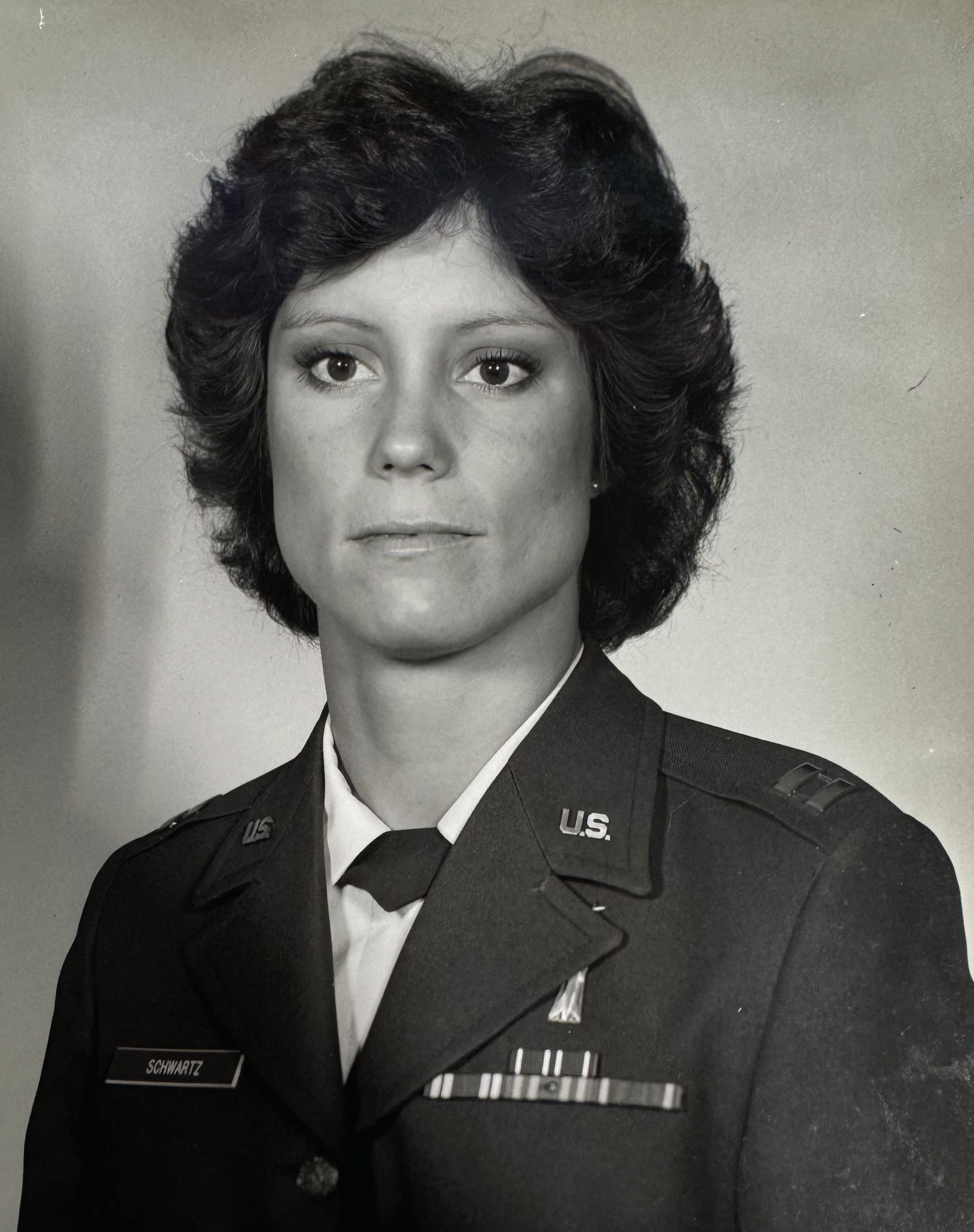
It was the summer of 1976 and Bonnie Schwartz was preparing for her first year of college at the U.S. Air Force Academy, and while the anxiety of starting college coupled with the rigidity and high expectations of the U.S. Air Force Academy is enough to trouble an 18-year-old freshman, Schwartz was also a first. She was one of just 157 women who were accepted into the U.S. Air Force Academy in 1976 — just months after President Gerald Ford signed Public Law 94-106 into action, directing U.S. service academies to accept applications from women. While Schwartz was focused on her future, the entire nation was watching.
“We were in the spotlight from the day we got to the Academy — there were reporters everywhere, there were photographers everywhere, everybody was trying to get a story,” Schwartz said. “The women who went there were not there to make any statements, they wanted to be there to be a part of serving the military.”
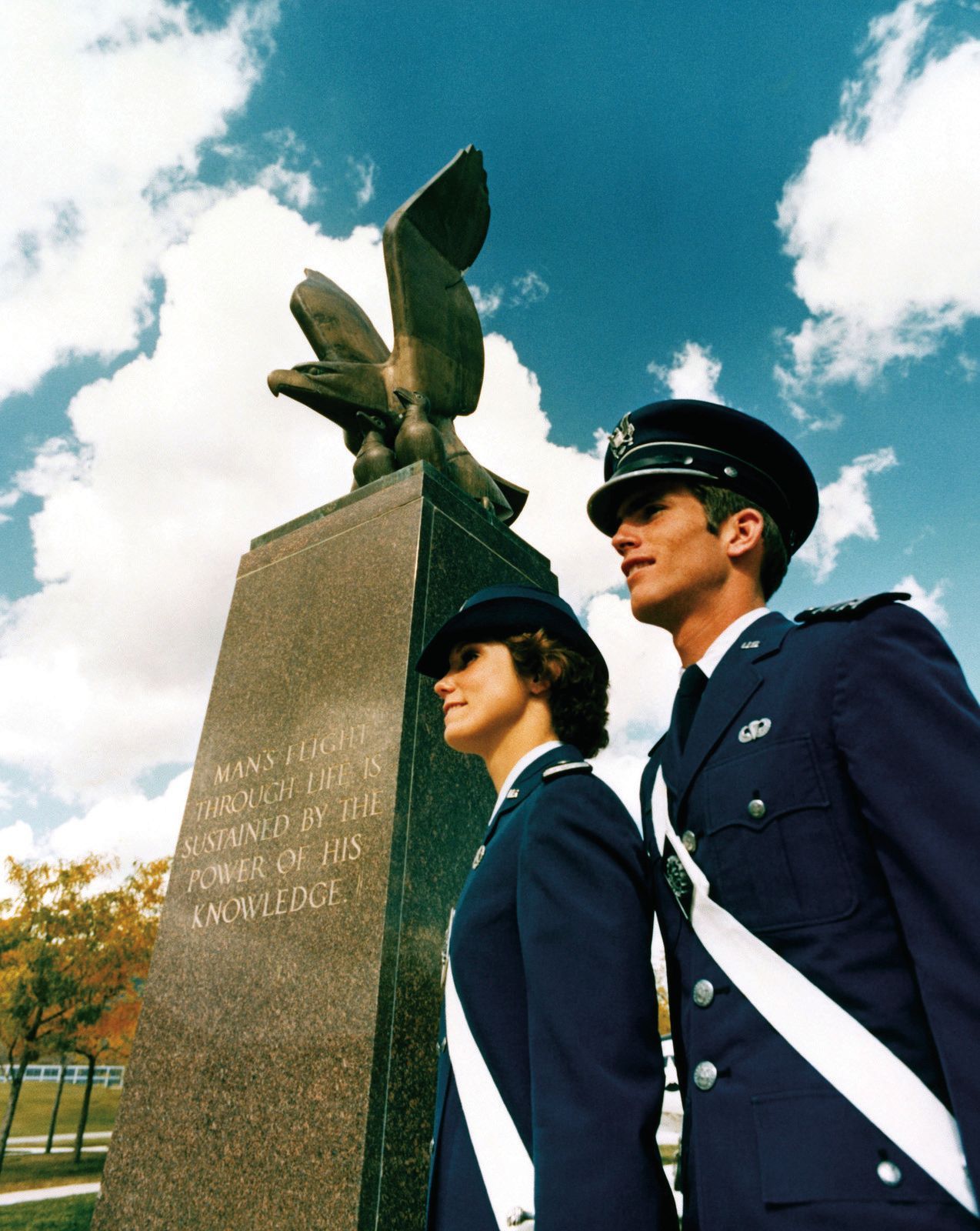
“The women have stood up and stood the test of time as leaders and as contributors, major contributors to the military and to civilian life.” — Bonnie Schwartz
This year marks 50 years since that first group of female cadets paved the way for the thousands of women who have attended the U.S. Air Force Academy in the years since. Of those initial 157, 97 women completed their educations at the Air Force Academy four years later, making up roughly 10 percent of the 1980 graduating class. Since then, the interest has continued to grow, with about one-third of the 2026 graduating class at the U.S. Air Force Academy being women.
But in 1976, women weren’t given a warm welcome into the U.S. Air Force Academy by everyone.
“It was a challenge because the upperclassmen, their job for any freshman class is to really make sure that they understand what they’re getting into in the Academy, so they challenged us incredibly, and on top of that, a lot of them were not very welcoming or happy that we were there, so women went through a lot,” Schwartz said. “The men took a lot of grief, too, for having women in their class, so we had such a strong bond among our whole class and really watched out for each other.”
150 Combs
Some of these challenges shaped the cadets forever, others provided much-needed comedic relief. Schwartz recalls the same barbers who shaved the men’s hair, provided short haircuts to the women. Female cadets had several hairstyles to choose from — all of which were quite similar — but when it came to styling their hair day-to-day, the Air Force Academy was one step behind.
“They had forgotten to buy combs for the women for their hair — so they had to run downtown quickly and buy 150 combs for us,” Schwartz said. “There were instances like that, but it was such a challenging but great experience.”
Though at times the transition was bumpy, every hurdle brought the class of 1980 closer.
“You’re watching out for your fellow cadets and making sure that they’re doing well and if you need to help them, you help them, and that was a wonderful experience,” Schwartz said.
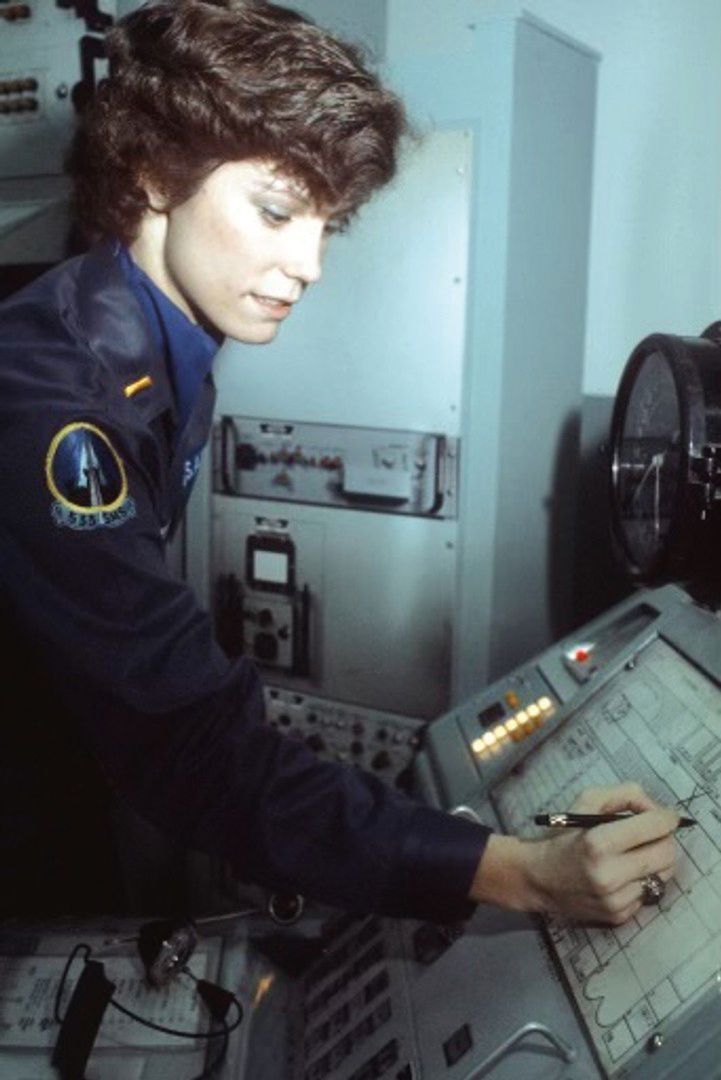
Schwartz was a competitive swimmer, partially choosing the Air Force Academy for its success in the pool on the men’s side, with the coach planning to lead a women’s team starting with the 1976 recruiting class. Schwartz went on to become an All American, swimming all four years. She was stationed at McConnell Air Force Base in Wichita after her graduation as part of the missile program, serving seven years in the military. Schwartz ultimately went on to work at Koch Industries in several roles for 25 years, earned a graduate degree in political science and an additional bachelor’s degree in electrical engineering. She taught college courses and became a vice president at a major U.S.-based energy company before retiring. The foundations of her successful career were rooted in the lessons she learned at the U.S. Air Force Academy.
“Our class motto was ‘strive not to equal, but to excel,’ and that has rung in my ears through the years, that to make the best contribution, it’s not enough just to equal, but to do your best no matter what you’re doing,” Schwarz said. “Do your best and make the biggest contribution that you can with the skills and the talents that you have.”
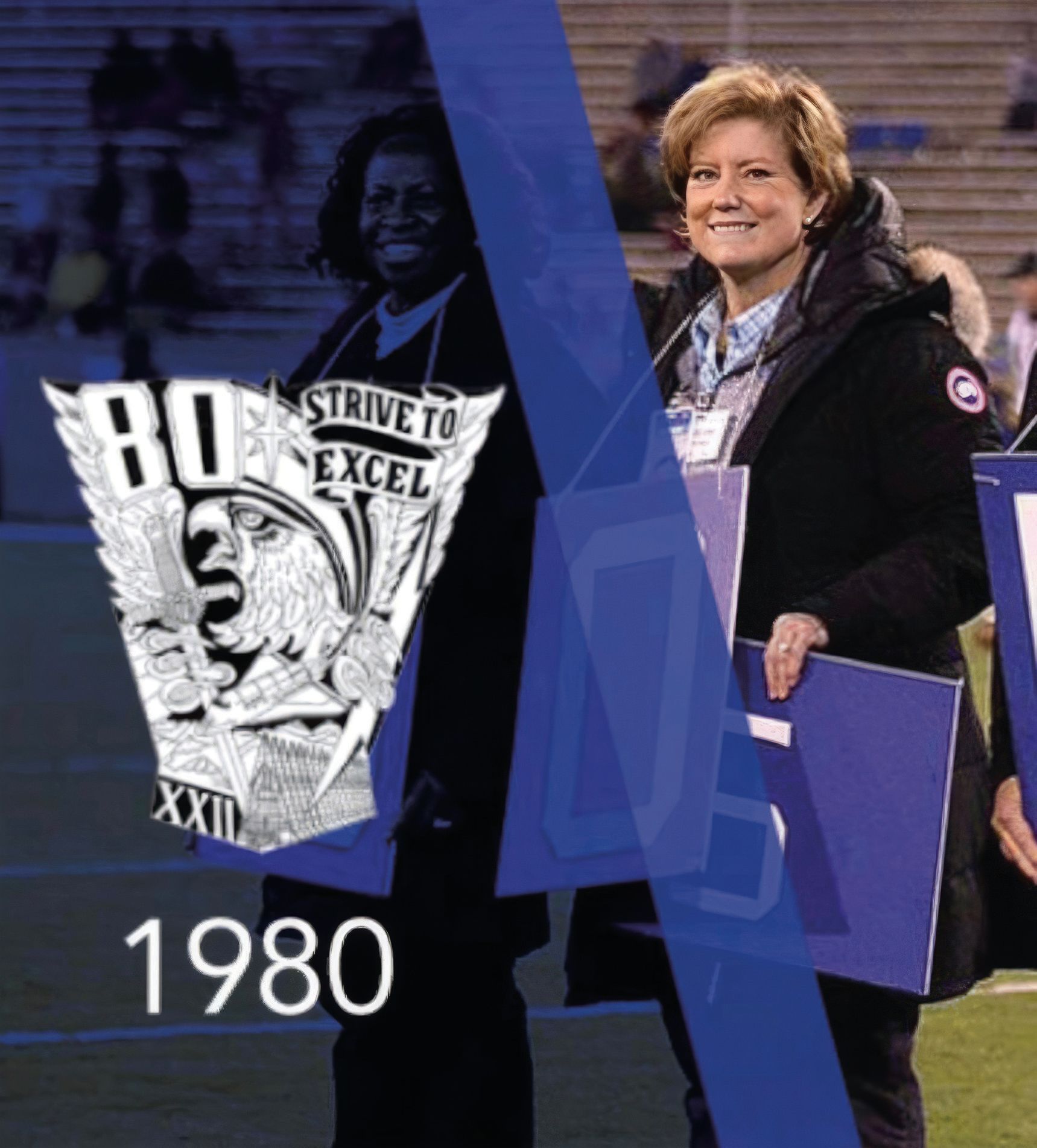
This year marks 50 years since women first joined the military service academies. The Air Force Academy observed the milestone with celebrations and recognition online.
Standing the Test of Time
In the decades since Schwartz first arrived at the U.S. Air Force Academy, women have accomplished historic milestones, like Schwartz’s classmates Janet Wolfenbarger who became the first female four-star general, and Susan Helms, the first American military woman in space. In the last 50 years, female graduates from the U.S. Air Force Academy have served roles in combat — including as fighter pilots — piloted the Thunderbirds, led the U.S. Air Force Academy in various roles, and even became Miss America.
“The women have stood up and stood the test of time as leaders and as contributors, major contributors to the military and to civilian life,” Schwartz said. “You really don’t know what all it will entail, but you also don’t know the incredible value that you come away with from graduation, and I see that with women who have graduated from the academy who are leaders in society and leaders in the military — they didn’t just say ‘I graduated, I achieved that, I’m done.’ It has stayed with the women who have gone to the academy and made such a great contribution to our country.”
Schwartz is still very close with all of her fellow cadets — men and women. Earlier this year, the U.S. Air Force Academy celebrated 50 years of women in its program, where Schwartz reunited with her female classmates and the women who came after her. She regularly attends reunions for the U.S. Air Force Academy, a reminder of the many ways she was so deeply changed fifty years ago.
“I would 100 percent do it all over again,” Schwartz said. “It’s been a treasure of my life.”