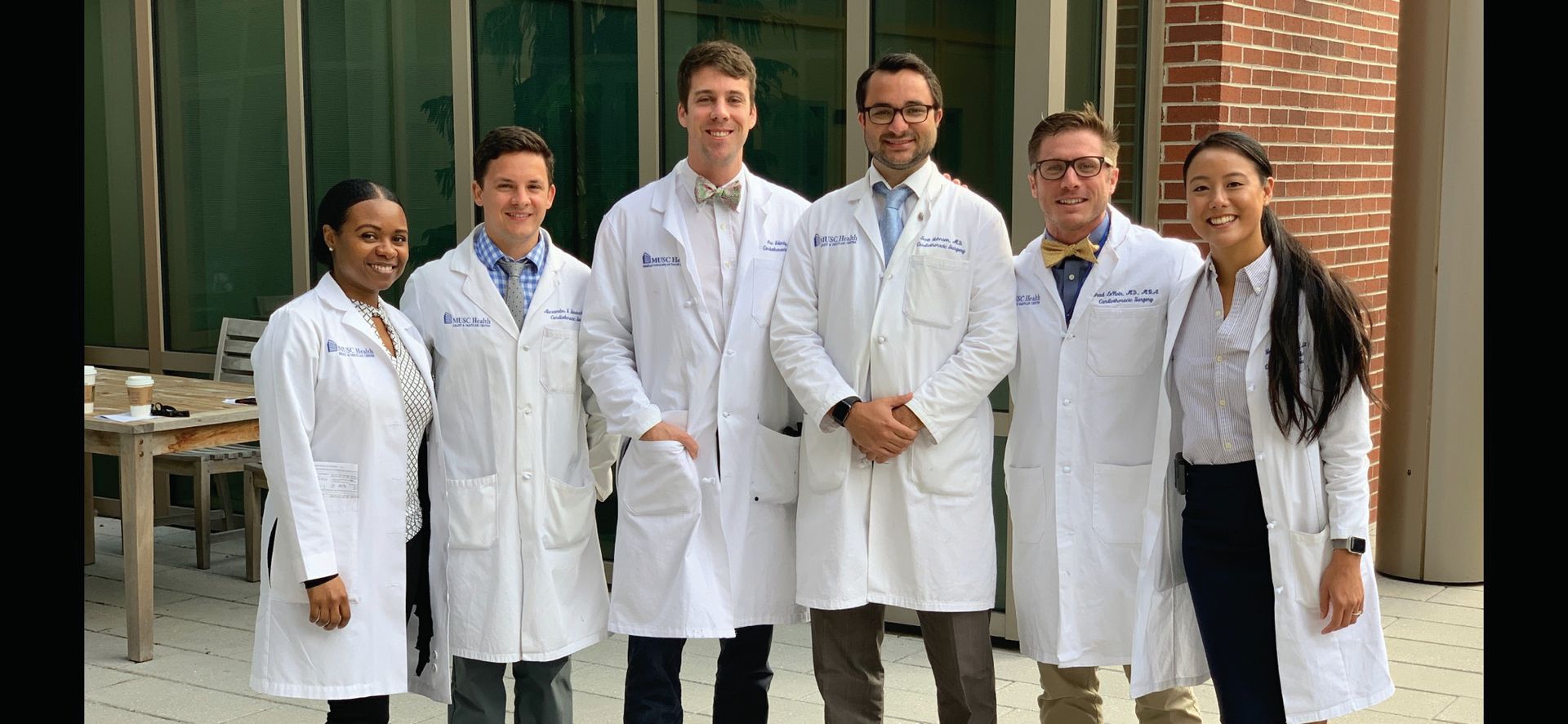
Mother and Med Student
Written by Paige Feikert
Mother and Med Student
Wichita Doctor Excelled While Raising a Daughter
Written by Paige Feikert
Dr. Quiana Kern with Kansas Medical Center decided on her career at a young age. After spending time in children’s hospitals fighting through childhood asthma, at nine years old, she knew her future was in medicine.
“Going through something so traumatic and scary as a child, the doctors made it such a wonderful experience, and the fact that they helped me and I got better inspired me to want to help people in a similar fashion,” Dr. Kern said.
Medical school and the subsequent training to become a doctor is rigorous — countless hours of studying, years of hands-on training, unforgiving testing — and by the time Dr. Kern arrived at medical school, she was also a mother to a toddler.

Dr. Kern with her daughter and husband, Arianna and Joe Rowsey.
Study, Sacrifice and a Sister
Raising a young child was demanding of her time, which inspired Dr. Kern to consider alternative careers in the medical field, careers that required fewer years of training. But they weren’t a fit — she knew she wanted to be a doctor, she had dreamt of it for years and no matter the circumstances, that dream was still nagging at her, so she honored that, both for herself and for her daughter.
“For me, there was a lot of sacrifice, because I couldn’t pour into her like a mother would want to do,” Dr. Kern said. “Even thought I went through a lot of trials and tribulations, I couldn’t give up, because I had already made the sacrifices of depending on my village to help me raise my child. The last thing I was going to do was fail when I had so much riding on it and I had sacrificed so much personally to make it happen.”
Dr. Kern’s sister moved close by during medical school to help her take care of her young daughter, and throughout her time at Morehouse School of Medicine, Dr. Kern balanced both titles: medical student and mom.
“There were times when I needed to focus and study and it was very challenging — I had to make some tough decisions sometimes. There was sacrificing and not being able to spend holidays and take vacations with my family, and then there were other times where I had to try to cram in as much studying as I could because I knew I couldn’t turn my back on my family,” Dr. Kern said. “Although I couldn’t fully focus on either one independently, I could devote enough to do my absolute best.”
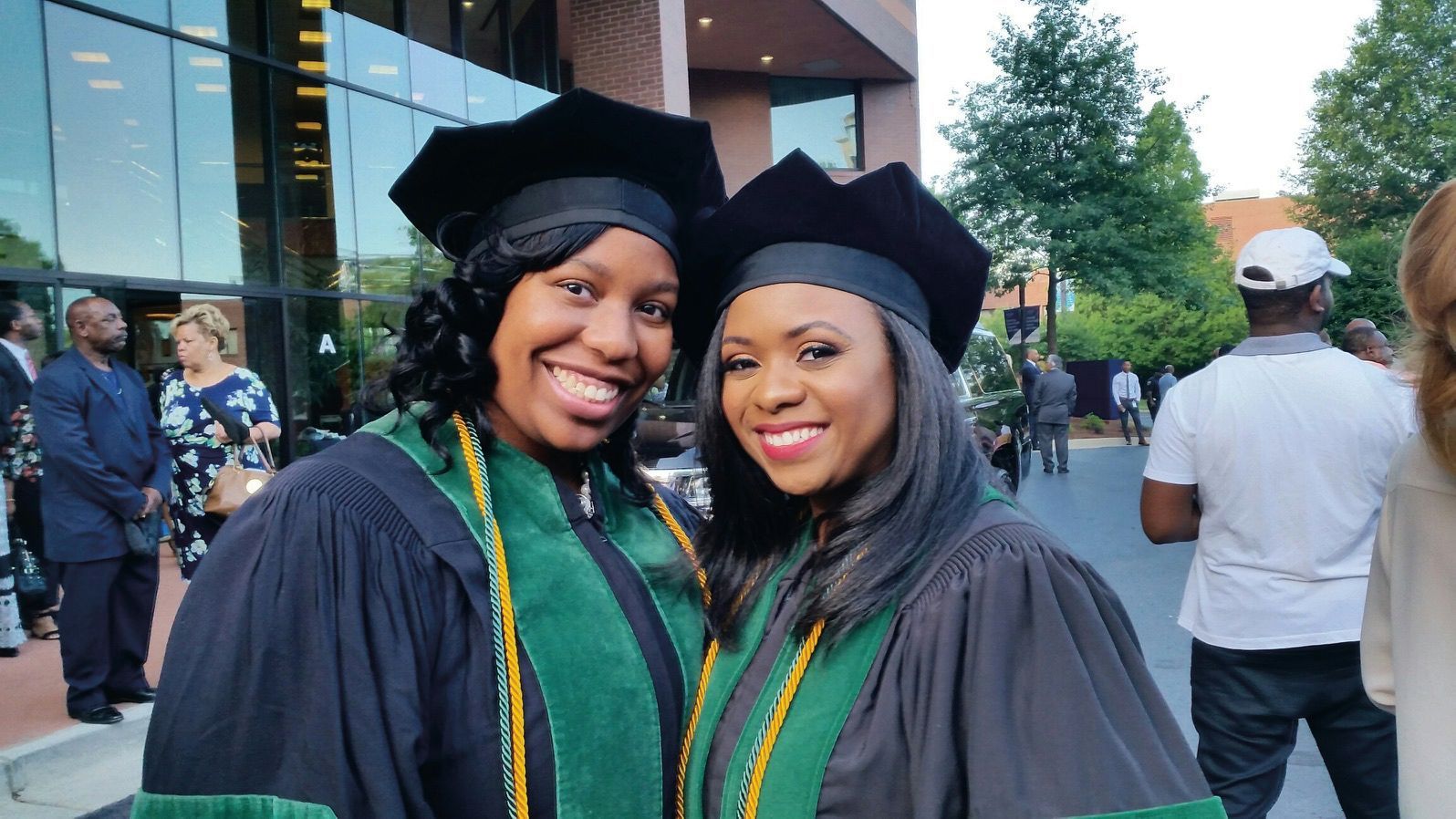
Dr. Kern graduated in the top nine percent of her class at Morehouse School of Medicine.
Crossing the Graduation Finish Line
Her hard work and sacrifices in balancing both roles led her to graduating in the top nine percent of her class, and she matched with an accelerated training program for cardiothoracic surgery. Dr. Kern was one of only a few who matched with the program out of more than one hundred candidates. She became the first woman in the program and still the only person of color who has ever graduated from that particular program. Traits that set her apart but also brought her tremendous challenges.
“I faced a lot of challenges where I felt like, due to being female and being Black, it was very hard for my mentors to figure out the best way to communicate with me and train me,” Dr. Kern said. “I felt like I was overlooked for certain things, and they were very critical on me and some people had even tried to heavily discourage me from pursuing my journey.”
Until this point, Dr. Kern had managed the feelings of guilt that came with balancing motherhood and the workload to pursue her dream career, the hours of studying to earn top test scores and academic excellence, and now, at the home stretch, Dr. Kern was forced to navigate biases from those who would help shape the most critical stage of her training and ultimately her career. But Dr. Kern was fueled by determination and an almost lifelong aching to become a doctor, so just as she had done for years before, she persevered.
“I think I went through the stages of grief with that and ultimately came out of it empowered more than ever to show them that I was built for this, that this was my calling,” Dr. Kern said. “When I graduated, all of those people had a change of view, and I found my own special way to let them know, ‘Hey, this really hurt at the time, but it made me to be the strong and resilient person that I am today.’ ”
By the time Dr. Kern finished her training, that toddler was a freshman in high school.
“She and I have a really special bond and I don’t feel like we had to rebuild a relationship, and she always understood what I was doing and why I was doing it and she’s appreciative of it,” Dr. Kern said. “She feels really good about seeing her friends look up to me as well.
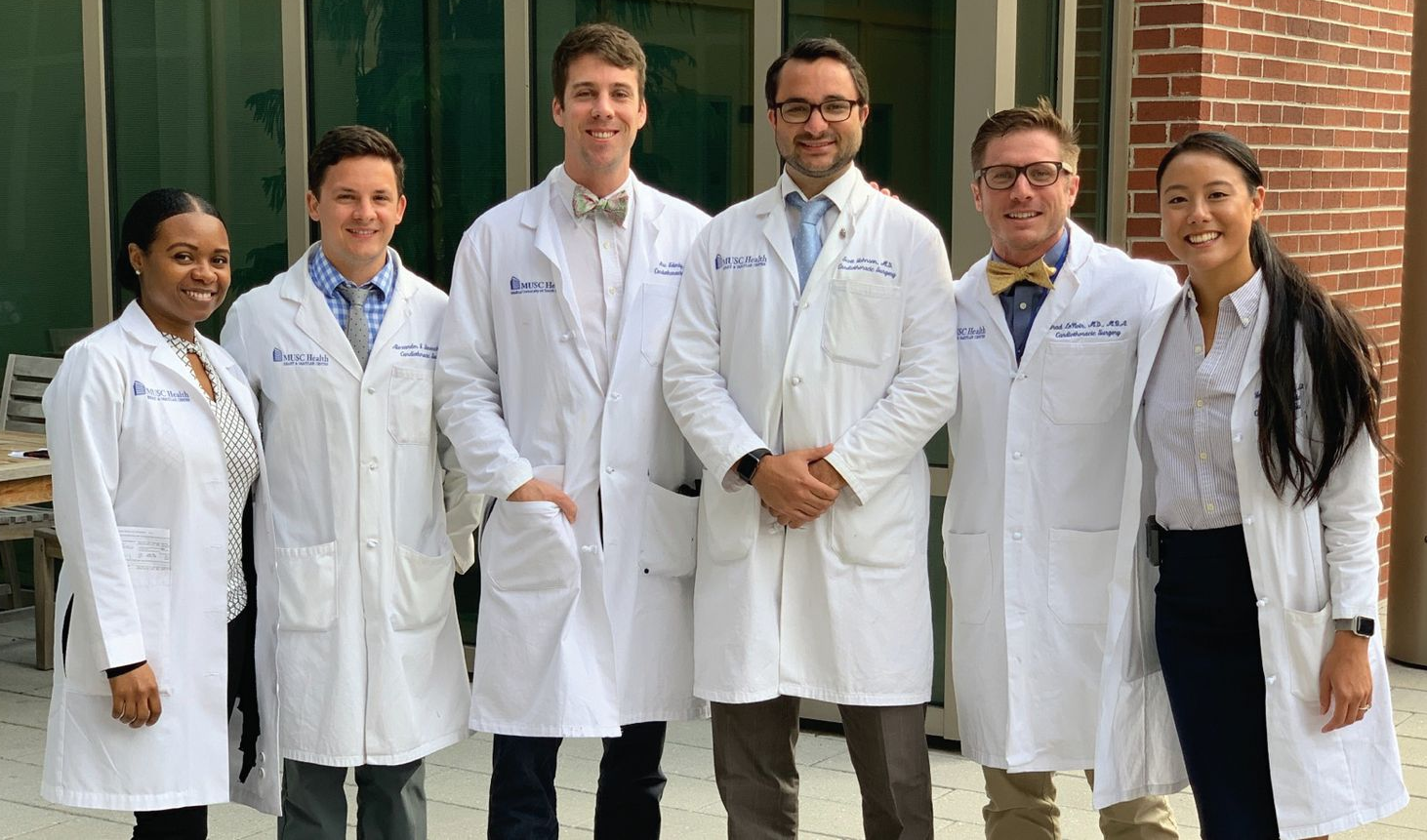
Dr. Kern was a chief resident at the Medical University of South Carolina, where she completed her training. She is the only Black woman to complete the accelerated cardiothoracic surgery program.
Becoming a Cardiothoracic Surgeon
Dr. Kern ultimately decided to focus on cardiothoracic surgery during her trauma rotation in medical school.
“There was a gunshot wound, there was bleeding, and after triaging the patient, it was clear that we had to take the patient to the operating room to get control of it, and we had to go through the chest — that was my first exposure to seeing the heart and lungs,” Dr. Kern said. “It was in that moment saving that patient’s life that I knew I wanted to be a cardiothoracic surgeon.”
Since making that decision, Dr. Kern has dedicated her training and education to the cardiovascular system and the thoracic cavity, which includes the heart, lungs and other organs and tissues. She’s passionate about cardiac health, especially for women who are at a high risk of heart disease.
“It’s important for women to realize that we do provide that caregiving role for others, but it’s okay to prioritize our own health,” Dr. Kern said. “It’s not being selfish, it actually ensures that we have enough energy to care for the people that we love.”